


Tea Bag Paper Rolls
Your Reliable Tea Bag Paper Rolls Manufacturer & Supplier
——High-Performance Roll Goods & Components for Automated Packaging Lines
Tea bag paper rolls are base materials used in automated tea bag production lines to form, fill, and seal tea bags. They are widely used by tea manufacturers and packaging factories for continuous and high-efficiency production. We supply different types of tea bag roll materials designed for various machine systems and packaging requirements, including mesh, non-woven fabric, and string-compatible materials.
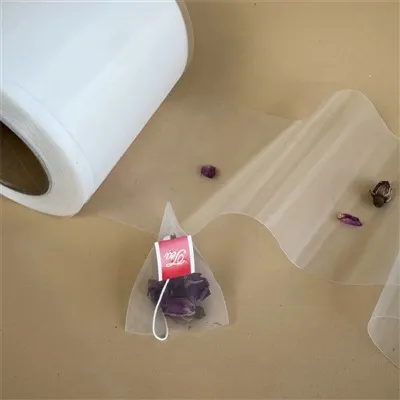


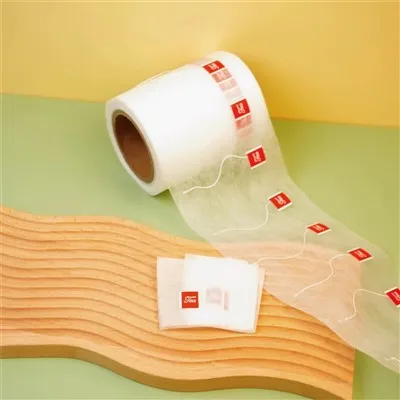

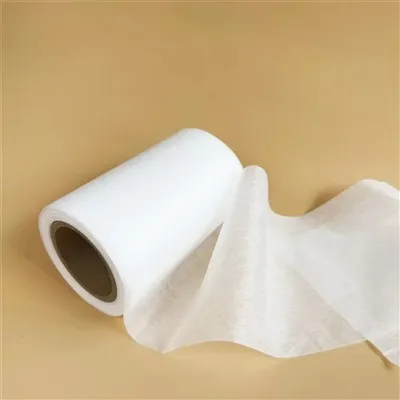


Eco-Friendly Fabric Rolls
Roll stock for tea bag production and industrial packaging lines, suitable for high-speed cutting, forming, and sealing processes.
PLA Corn Fiber Mesh Roll with Tag
Plant-based mesh material suitable for eco-friendly tea packaging. Some options come with pre-attached paper tags for simplified production.
PP Non Woven Fabric Roll
Standard polypropylene non-woven material designed for cost-effective and stable tea bag production.
Non Woven Printed Fabric Rolls
Non-woven roll materials with printed logos or patterns for branded tea packaging applications.
Pre-Formed Tea Bag
Pre-shaped empty tea bag structures designed for use in automatic tea bag filling and sealing machines.
Empty Tea Bags with String and Tag: Pre-assembled tea bags with attached string and tag, suitable for semi-automatic and automatic filling processes.
Empty Nylon Tea Bags / Nylon Mesh Tea Bags: Nylon mesh tea bags are designed for a transparent appearance and use with loose leaf tea or herbal products.
Empty Triangle Tea Bags: Pyramid-shaped tea bags designed to hold larger tea leaves and allow sufficient brewing space.
Organic Empty Tea Bags: Tea bags made from natural or plant-based materials, suitable for organic product packaging requirements.
Disposable Tea Bags: Standard empty tea bags suitable for general-purpose tea packaging and commercial use.

Packaging Consumables
Materials used in tea bag production and packaging processes.
Tea Bag String Roll: Food-grade string used for tea bag sealing and tagging in automated or manual production lines.
Technical Machine Compatibility Guide
|
Roll / Substrate Format |
Sealing Technology |
Primary Material Base |
Best Suited For |
|
PLA Corn Fiber Series |
Ultrasonic / Sonic Welding |
100% Corn Starch Base |
Premium eco-friendly pyramid bags, luxury whole-leaf tea |
|
Non-Woven Series (PP/Printed) |
Heat-Seal / Thermal Bonding |
Polypropylene / Polyester |
Functional herbal powders, traditional medicinal tea cuts |
|
Nylon Mesh Series |
Ultrasonic Sealing |
High-Tensile PA6 Nylon |
High-speed commercial lines, highly visual loose-leaf blends |
|
Cotton String Rolls |
Knotting / Sonic Tagging |
100% Pure Organic Cotton |
Industry-standard tag attachment machinery (IMA/Maisa) |
Application Scope
Tea bag paper rolls and related materials are widely used in:
Automatic tea bag packing machines
Tea processing factories
OEM tea packaging production
Herbal and functional tea packaging
Private label tea manufacturing
Advanced Manufacturing Capacity
Our state-of-the-art facility is built to guarantee supply chain stability for large-scale global contract orders:
High-Volume Weaving & Slitting
Powered by 200 advanced specialized looms, we weave over 100,000 meters of filtration fabric daily. Our slitting lines can customize roll widths to your exact equipment specifications (e.g., 120mm, 140mm, 160mm, 180mm).
Precision Tagging Production
Equipped with 80 high-speed automatic labeling setups, producing over 9 million customized tags and labels daily, ensuring zero defect rates on pre-tagged roll goods.
Aseptic Packaging
All rolls are tightly wrapped in protective moisture-proof poly-shielding and packed into heavy-duty export-grade shipping cases to prevent edge damage during ocean freight.
Compliance & Global Certifications
Our production facility is certified to ISO 22000, ISO 9001, and ISO 14001 standards. SGS and TAF independently test tea bag materials to help ensure quality, safety, and compliance for food-contact packaging applications.

FAQ